NVIDIA's $68.1 Billion Quarter: Gaming GPUs Are Now 11% of Revenue and Rubin Promises 10x Cheaper Inference
The Numbers
NVIDIA reported fourth-quarter fiscal 2026 earnings on February 25, and the numbers are staggering:
- Q4 Revenue: $68.1 billion (up 73% year-over-year, up 20% quarter-over-quarter)
- Full-Year Revenue: $215 billion
- Data Center Revenue: $62.3 billion (up 75% year-over-year)
- Data Center as % of Total Revenue: 91%
- Gaming Revenue as % of Total Revenue: 11.45%
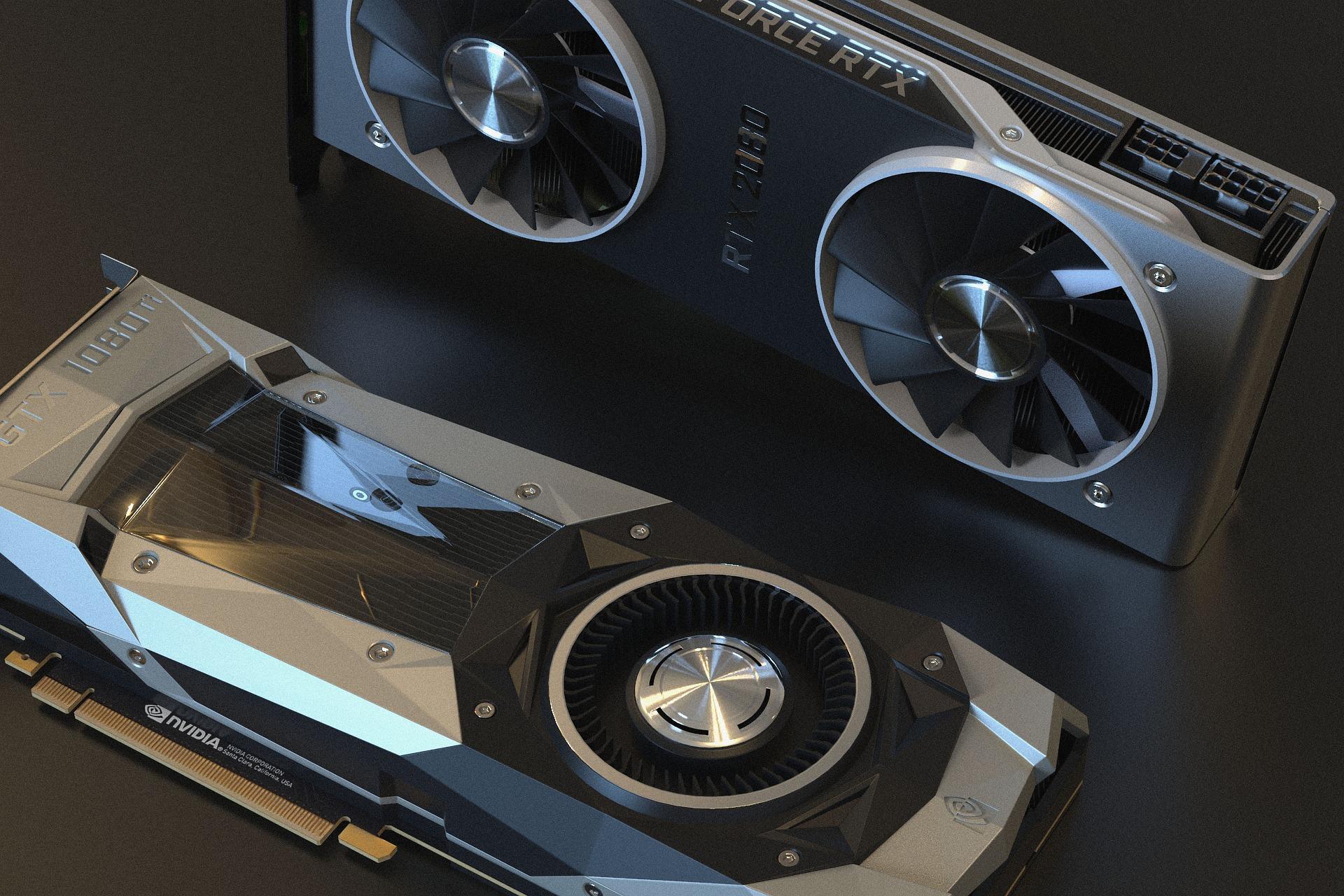
That last number is the one worth sitting with. NVIDIA — the company that built its brand on gaming GPUs — now makes less than 12% of its revenue from gaming. The GeForce division that defined PC gaming for two decades is now a rounding error compared to the data center business.
This isn't a pivot. It's a completed transformation.
Why Developers Should Care
If you're building anything that touches AI infrastructure — training models, running inference, deploying agents — NVIDIA's earnings are a leading indicator of what compute will cost and where it's heading.
The Demand Signal Is Real
$68.1 billion in a single quarter means the companies buying these chips — the hyperscalers, the AI labs, the cloud providers — are betting massive capital that AI workloads will continue scaling. Alphabet, Amazon, Meta, and Microsoft are collectively spending $650 billion on AI infrastructure in 2026, up from $410 billion in 2025.
This isn't speculative anymore. These companies are seeing returns that justify doubling down. For developers, this means:
- Cloud GPU availability will improve — More data centers mean more GPU instances for rent
- Pricing pressure will increase — Competition among cloud providers for AI workloads should push inference costs down
- The ecosystem keeps growing — More CUDA-optimized libraries, more frameworks, more tooling
Gaming Hardware Gets Deprioritized
When gaming is 11% of your revenue and data center is 91%, product roadmap priorities follow the money. Expect fewer gaming-first GPU launches and more SKUs optimized for inference, training, and enterprise workloads.
For developers who use consumer GPUs for local development and testing — running local LLMs, fine-tuning small models, testing inference pipelines — this could mean higher prices and longer waits for gaming-class hardware. The RTX line isn't going away, but it's no longer the main event.
Rubin: The Next Platform
The bigger story from NVIDIA's earnings call wasn't the backward-looking financials — it was the forward-looking announcement about Rubin, NVIDIA's next-generation GPU platform.
What Rubin Promises
- 10x reduction in inference token cost compared to Blackwell (the current generation)
- 50 PFLOPS of NVFP4 inference performance per GPU
- 3.6 TB/s memory bandwidth per GPU
- Volume production in the second half of 2026
- Samples already shipping to lead customers
Why 10x Cheaper Inference Matters
The economics of AI deployment are dominated by inference costs. Training a model is a one-time expense. Running it — serving predictions, powering chat interfaces, executing agent workflows — is an ongoing cost that scales with usage.
A 10x reduction in cost per token fundamentally changes what's economically viable:
- Agentic AI becomes affordable at scale — Running multi-step AI agents that make dozens of API calls per task is currently expensive. Cut inference costs by 10x and the math changes dramatically
- Smaller companies can compete — The current GPU economics favor companies that can afford to run models at scale. Cheaper inference lowers the barrier to entry
- Local-first AI gets closer — If cloud inference is 10x cheaper, the pressure to run models locally (and deal with the complexity) decreases
Who Gets Rubin First
NVIDIA confirmed that AWS, Google Cloud, Microsoft Azure, and OCI will be among the first to deploy Rubin-based instances. Cloud partners CoreWeave, Lambda, Nebius, and Nscale are also in the pipeline.
For most developers, Rubin access will come through cloud provider instance types. Expect preview instances in late 2026, with general availability likely in early 2027.
The Competitive Landscape
NVIDIA's dominance isn't unchallenged. AMD is growing its MI300 series, and custom silicon from Google (TPUs), Amazon (Trainium), and others continues to improve. Meta just signed a $60 billion deal with AMD for AI chips over five years.
But NVIDIA's moat isn't just hardware — it's CUDA. The software ecosystem, the developer tools, the libraries, the optimization frameworks. Switching from NVIDIA to an alternative means rewriting inference pipelines, revalidating performance, and losing access to the largest GPU computing ecosystem in the world.
For developers, this means:
- CUDA skills remain valuable — The ecosystem isn't going anywhere
- But watch the alternatives — AMD's ROCm is maturing, and cloud-specific accelerators (TPUs, Trainium) can be significantly cheaper for specific workloads
- Don't assume NVIDIA pricing forever — Competition is real, even if NVIDIA is winning today
The Bottom Line
NVIDIA's Q4 earnings confirm what was already obvious: the AI infrastructure buildout is the defining technology investment of this decade. $68.1 billion in a quarter. $215 billion in a year. Gaming at 11%.
For developers, the practical implications are clear. GPU compute is getting cheaper, more available, and more optimized for AI workloads. Rubin's 10x inference cost reduction — if it delivers — will make a new class of AI applications economically viable.
The question isn't whether AI infrastructure will continue scaling. It's whether you're building things that take advantage of it.
Sources
- Nvidia (NVDA) earnings report Q4 2026 — CNBC
- NVIDIA Announces Financial Results for Fourth Quarter and Fiscal 2026 — NVIDIA Newsroom
- Nvidia posts record $215 billion annual revenue — gaming GPUs now only 11.45% of revenue — Tom's Hardware
- Nvidia smashes Q4 2026 with $68 billion in revenue — Fortune
- Inside the NVIDIA Rubin Platform — NVIDIA Technical Blog
- Big Tech set to spend $650 billion in 2026 as AI investments soar — Yahoo Finance